

Key takeaways:
- The Texas SHARS Reality: More Than Just Billing
- Two Approaches to SHARS Technology
- 1. Billing-First Platforms
- 2. SHARS-First Platforms
- What “SHARS-First” Looks Like in Practice
For Texas school districts, School Health and Related Services (SHARS) reimbursement has never been simple. And today, staying compliant requires an even more thoughtful approach.
Policy tightening, increased audit scrutiny, and heightened documentation requirements have fundamentally changed what districts need from their Medicaid technology partners. The days of “submit and hope” billing are gone. Administrators now need defensible, SHARS-aligned systems that protect districts while maximizing reimbursement.
This post is the first in a series exploring what truly differentiates modern SHARS platforms — and why compliance-first design matters more than ever.
The Texas SHARS Reality: More Than Just Billing
Texas districts are navigating a rapidly evolving SHARS environment:
In this environment, a Medicaid system that functions primarily as a billing engine leaves too much risk on the district.
What districts need instead is a platform that anticipates SHARS rules, flags issues before claims are submitted, and provides visibility into compliance with IEPs: in short, a platform that shows you the problems before they become compliance or reimbursement issues!
Two Approaches to SHARS Technology
Across Texas, districts tend to encounter two very different approaches to Medicaid platforms:
1. Billing-First Platforms
These tools focus on claim submission and tracking payments. While helpful for processing, they often:
This model may have worked when SHARS rules were looser — but today, it exposes districts to repayment risk.
2. SHARS-First Platforms
A SHARS-first platform is designed around Texas Medicaid rules first, billing second. This approach:
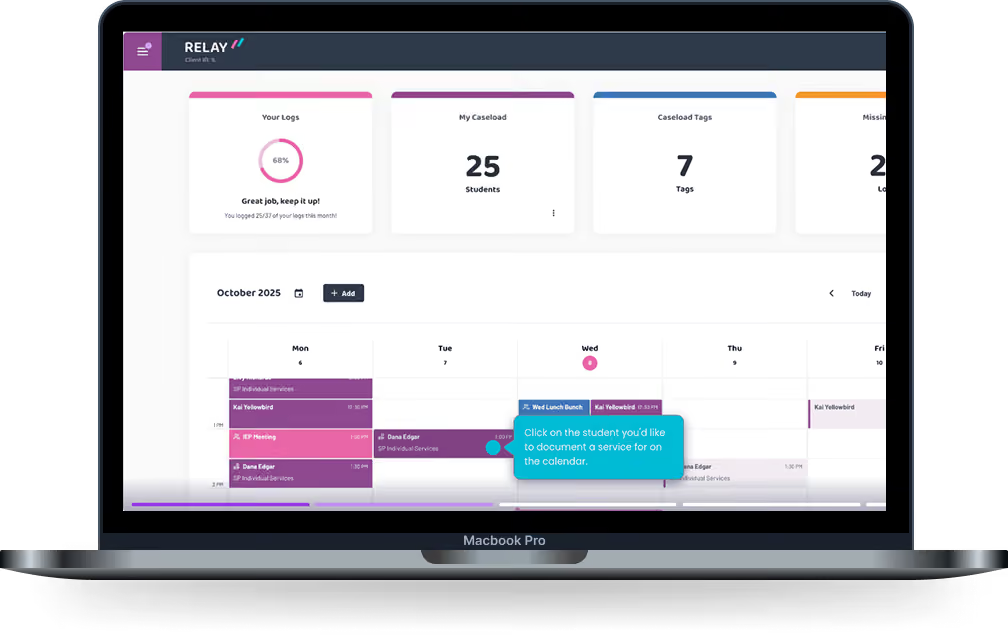
Relay was built using this second model, specifically for states like Texas where SHARS compliance is as critical as reimbursement volume.
👉 See How Relay Helps with Texas SHARS Funding Compliance
What “SHARS-First” Looks Like in Practice
For Texas administrators, SHARS-first design shows up in tangible ways:
Built-In SHARS Compliance
Instead of reacting to audit findings after the fact, Relay proactively supports:
This shifts compliance from a year-end scramble to an ongoing safeguard.
Seamless District Data Flows
Manual entry is one of the biggest sources of SHARS risk. Relay can retrieve data from:
By reducing duplicate data entry, districts reduce errors, denials, and staff frustration.
Provider-Friendly Service Logging
Therapists, nurses, and counselors are more likely to log services accurately when tools work the way they do. Relay supports:
Better provider adoption leads to better documentation — and better reimbursement defensibility.
Analytics That Protect Districts
Relay’s analytics dashboards surface what districts need to know before an audit:
This level of visibility is critical in today’s SHARS climate.
Why This Matters Now in your SHARS program
Texas SHARS expectations have evolved. Districts are expected to:
Platforms that stop at billing shift too much responsibility back onto administrators who are already stretched thin.
Relay’s approach reflects a broader shift in SHARS strategy — from reactive billing to proactive compliance protection.
Resources and Links:
📘 Official SHARS Guidance & Manuals
📄 SHARS Participation & Operational Guidance
Subscribe to Our Newsletter
Get practical tips and the latest insights on special education and school-based Medicaid, delivered straight to your inbox.
Related Posts

The School Health and Related Services (SHARS) billing process in Texas is undergoing significant changes that will require school districts to reassess how they handle reimbursements.

Texas school districts are being introduced to the newest all-in-one student documentation platform, streamlining their Medicaid SHARS program.

In today’s digital world, school-based service providers face increasing demands for accurate, timely, and compliant documentation.
Give your team their time back
See how Relay makes special services simpler from the first log to the last claim.