Key takeaways:
- More students are receiving special education services, while staffing shortages continue to put pressure on district teams.
- The cost of providing required services is rising faster than many traditional funding sources.
- Districts are increasingly absorbing the gap with local dollars at a time when broader budgets are already under pressure.
- School-based Medicaid reimbursement gives districts an opportunity to recover funding for eligible services they are already providing.
More students need special education services. Qualified providers are harder to find. Costs are rising. And funding isn't keeping pace.
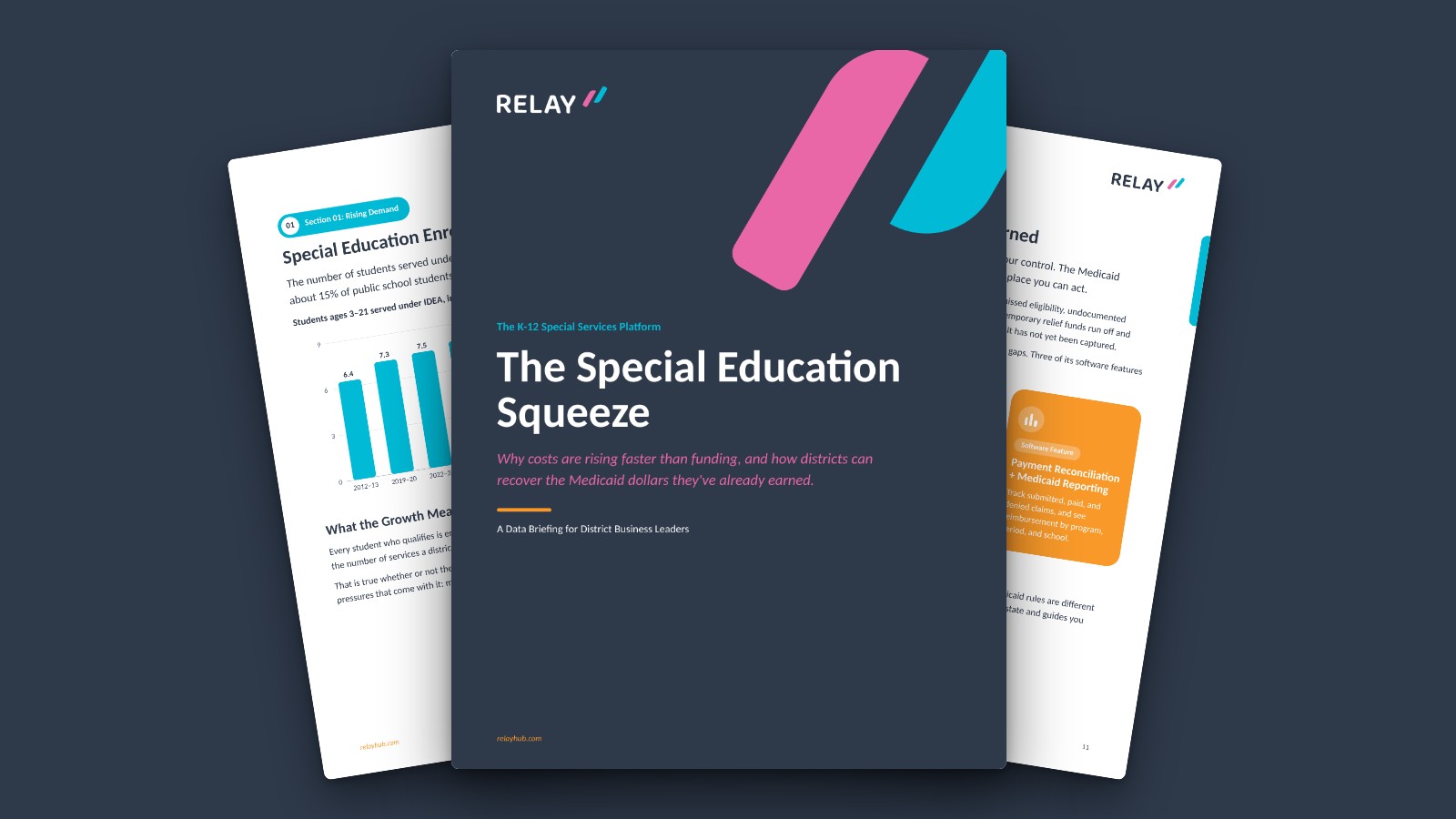
The Special Education Squeeze looks at the data behind the growing financial pressure on districts and where leaders still have opportunities to act.
The Pressure Is Building
15% of public school students now receive services under IDEA, up from 13% in 2012–13.
45 states reported special education teacher shortages in 2025.
And one analysis across 24 states found $24.1 billion in local dollars being used to cover the gap between special education spending and dedicated state and federal funding.
Where Districts Can Act
Districts can't control funding formulas, staffing shortages, or rising costs. But they can take a closer look at whether they're capturing the Medicaid reimbursement they've earned.
The report explores how stronger eligibility, documentation, compliance, and claiming processes can help districts protect valuable funding.
Download The Special Education Squeeze for the full data briefing.